Creator Hub
Gaia Cut Animation Time From Weeks to Hours with Higgsfield Enterprise

Gaia Cut Animation Time From Weeks to Hours with Higgsfield Enterprise

Higgsfield5 min
per 12-sec video
20 minutes
running concurrently
3+ shows
as primary tool
Supercomputer

Gaia is the leading wellness-focused and conscious streaming platform headquartered in Louisville, Colorado, producing and distributing original programming for a global audience. Its production, marketing and AI engineering teams use Higgsfield Enterprise for AI-assisted image and video generation. Gaia says animation work that once took days or weeks can now be completed in hours, while multiple standalone AI subscriptions have been consolidated into one platform.

Gaia says it serves more than 900,000 members in 185 countries, with a library of over 8,000 titles, spanning documentaries, original series and yoga programming.
The challenge

Gaia produces much of what it streams, and it operates closer to a studio than a channel: an in-house post department, its own engineers, and a dedicated AI team. David Kalish, who manages Gaia’s post department and administers its AI team, oversees how AI generation runs across the company. Higgsfield is used daily across all three groups: production, marketing and AI engineering. Kalish says one current show is being built with AI from front to back.

Before AI entered the workflow, Gaia’s animation process followed a traditional sequence: create an image, animate it, and refine the finished piece over days or weeks using Adobe Photoshop, After Effects and Cinema 4D.

Two to three years ago, the first generation of AI tools arrived.

“These apps gave us some new tools but ultimately, we spent a lot of time and money and got sub-par results”

For Gaia, the constraint was never generation itself. It was reliability. Unpredictable outputs meant endless revision cycles, and revision cycles consumed whatever time the tools had promised to save.

The idea

Gaia evaluated Higgsfield against the AI tools already in use across the business. According to Kalish, the evaluation led the company to shift most of its AI-generation work to Higgsfield rather than add another standalone tool to the stack:

“We switched all of our use over to Higgsfield and shut down almost all of our use of those other programs.”

Higgsfield now handles much of the image and animation-generation work that was previously spread across separate AI tools, Kalish says. For Kalish, the practical benefit was fewer separate tools to manage:

“It’s all-inclusive, it’s like à la carte — you can get everything in one place.”

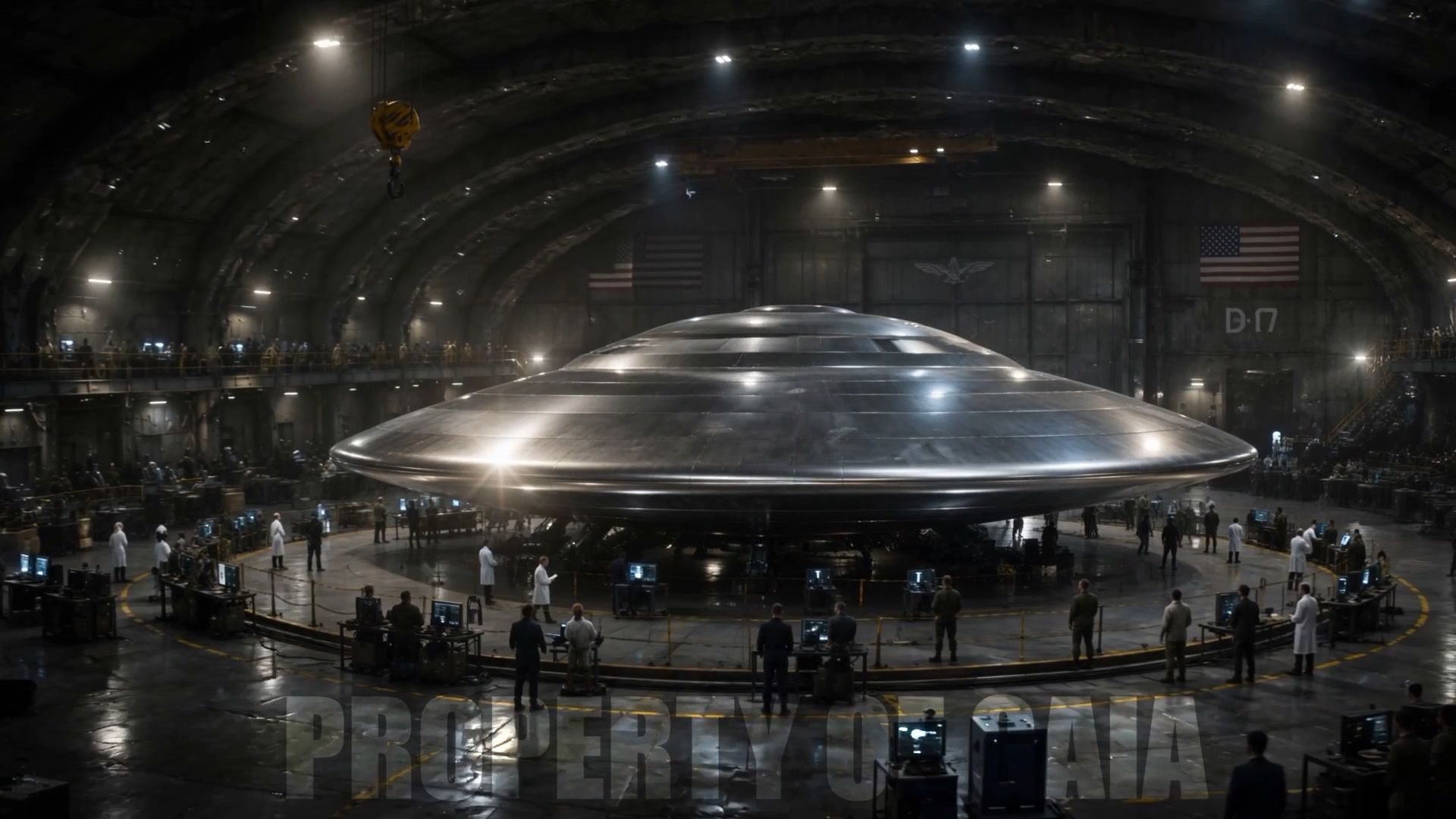
Shot from the video
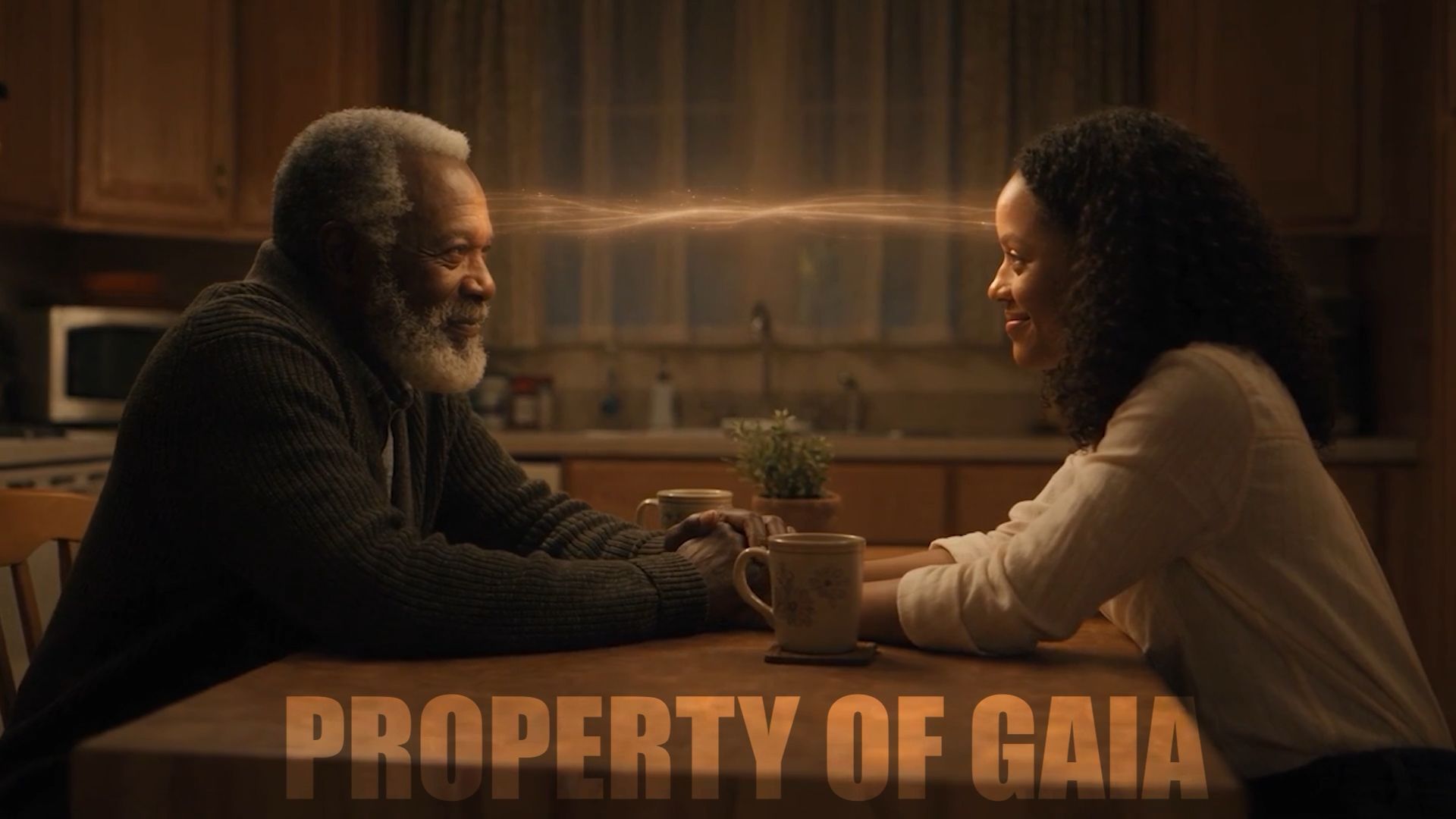
Shot from the video

For Gaia, privacy and contractual protections came before scale. As a publicly listed company, the team needed Higgsfield to meet its internal protection and privacy requirements before use expanded across production, marketing and AI engineering.

Gaia and Higgsfield established a bespoke agreement to support those requirements. Only then did volume become part of the evaluation.

How it was built

Gaia starts with a script, then breaks it into scenes. Each scene pairs a block of voiceover with a shot description.

The team develops prompts in Claude and sends them into Higgsfield through the platform’s MCP integration. For larger sequences, Gaia uses Supercomputer within Higgsfield to generate a full run of shots.

Still imagery is generated first and laid out on a Premiere timeline. Only after the visual direction is approved does animation begin.

The sequence is the point: composition, subject and style are resolved while the work is still static, and motion is generated last, after sign-off. Animation has run on that discipline for a century; the storyboard exists because motion is the most expensive place to change your mind. Gaia kept the discipline and changed the price.

One Supercomputer run illustrates the speed of the workflow:

“I was able to generate five animations of 12 seconds each in 20 to 30 minutes.”

Kalish compares that with a shot that would once have kept an After Effects animator working overnight and into the next day. Now, he says, the team reaches a comparable result in an hour or two.

Shot from the video
Shot from the video

The products

Gaia runs on Higgsfield Enterprise, with Supercomputer handling multi-shot generation runs and the Higgsfield MCP integration connecting the team’s Claude prompts to the platform. For generation, the team works across the models available in Higgsfield, including Seedance 2.0 and 2.5 for video and GPT Image 2, Seedream and Nano Banana Pro for stills.

The result

Gaia says animation work that once took days or weeks is now completed in hours, and for some generation tasks, minutes. Asked how quickly the team could get results, Kalish’s written answer was one word: “Immediately.”

Show volume has stayed consistent; the recovered time was reinvested in the work itself.

“It’s just the sophistication of the imagery and the animations is a much higher level.”

What a team does with recovered time says what the time was for. Gaia’s went back into the frame. AI use across productions was once sporadic; Kalish says three or more AI-heavy shows can now run concurrently.

Kalish also estimates that recreating Gaia’s cumulative AI-assisted output through traditional methods would run to hundreds of thousands of dollars:

“If I took all the AI that we did and said to an animator, make this without AI using traditional methods — it would be in the hundreds of thousands of dollars.”

Kalish is direct about where the costs actually sit, and it is not in the software line item: “However good you think you are at prompting, no one has a 100% non-fail rate. That ratio eats into your credits. That’s really where the cost is.”

Gaia reinvests some of the time saved on generation in learning and quality control. Higgsfield made the workflow faster; it did not eliminate the work of directing it.

Kalish summarized the change this way:

“Higgsfield AI has changed how we work, what we get done and what is possible.”

David Kalish, Gaia

by Higgsfield

Create at the speed of culture.

Built for teams that ship constantly. Here's what enterprise adds:

  • Unlimited users with centralized usage & credits
  • Shared workspaces & asset libraries
  • Priority rendering when the moment hits
  • Dedicated partner manager
  • SSO & security review

More case studies

Show all