For Tango’s “Liberá tu cocodrilo” campaign, the Ecuadorian production company combined a live shoot in Quito with AI character and environment work. Levector estimates that Higgsfield saved three weeks or more in certain character-development stages compared with a traditional 3D pipeline.
The challenge
Levector needed to show how a human character could become a dancing crocodile before the Tango campaign went into production.
The Ecuadorian production company has more than 17 years of experience in production and post-production. When competing for a project, Levector develops a treatment with the director, investing in the creative proposal before the job is awarded.
For “Liberá tu cocodrilo” (“Set Your Crocodile Free”), that proposal involved a lead crocodile, supporting characters, and a city that changes around the performers. Film references and static illustrations could only explain so much of the intended result.
Traditionally, an illustrator might take two or three days to deliver a first character concept. Changes to the face, proportions, color, or wardrobe would extend that process. Even an approved illustration left another question unresolved: how would the crocodile move and interact within a live-action scene?
The idea
Levector built the campaign around directed human performances. Dancers would provide the movement and energy, with AI transforming the characters and their surroundings.
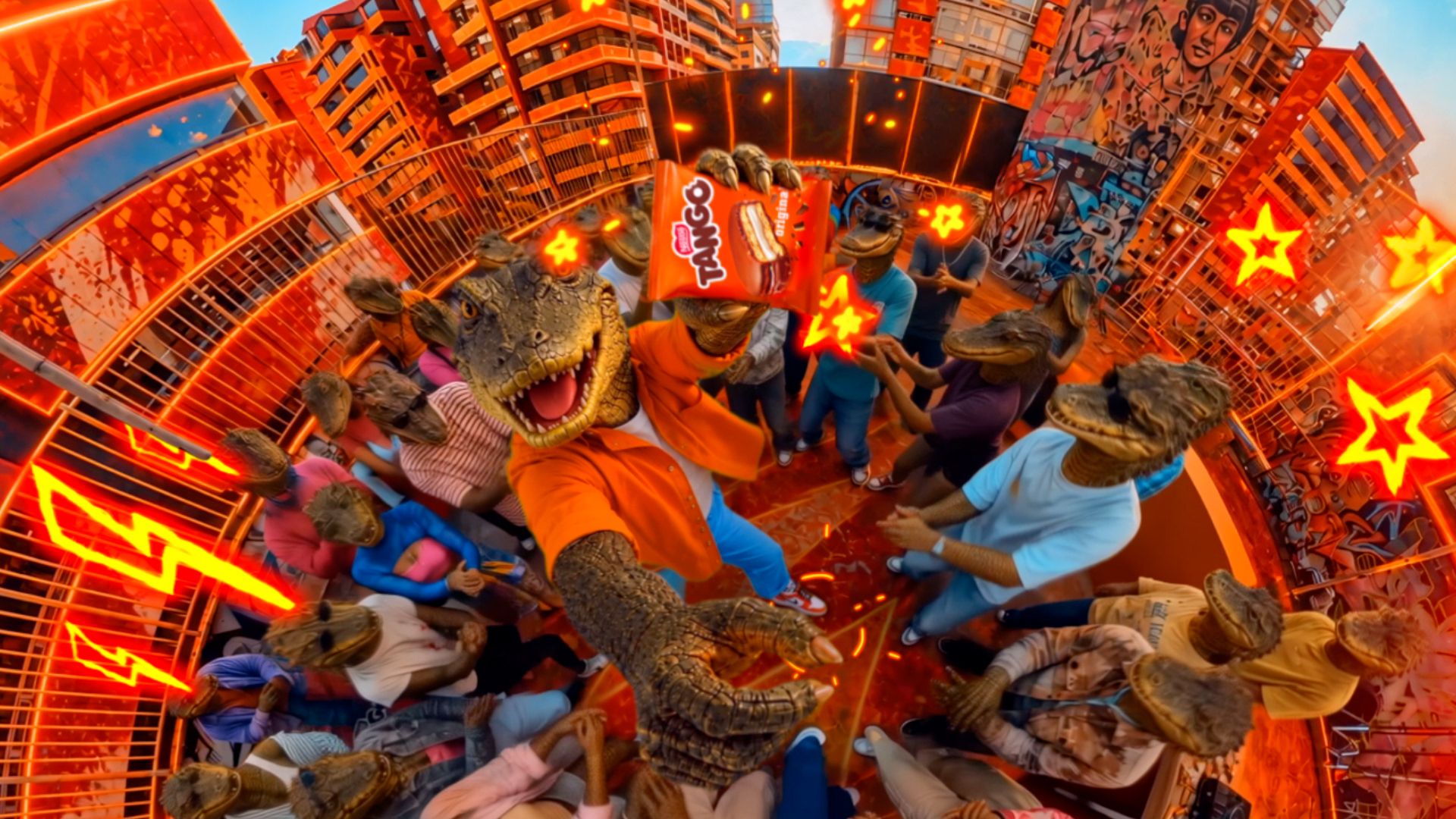
The film begins in a black-and-white city. Orange appears in the Tango packaging and a crocodile display before the lead character takes a bite. The transformation then spreads through the character and the setting, leading into a group dance sequence in a city covered in orange graphics and glowing outlines.
That approach required decisions about the crocodile’s appearance and behavior well before the shoot.
How it was built
During the treatment stage, Levector used Higgsfield to explore crocodile designs, character views, environments, and movement. The team could generate and compare variations within hours, bringing a more developed visual proposal into client discussions.
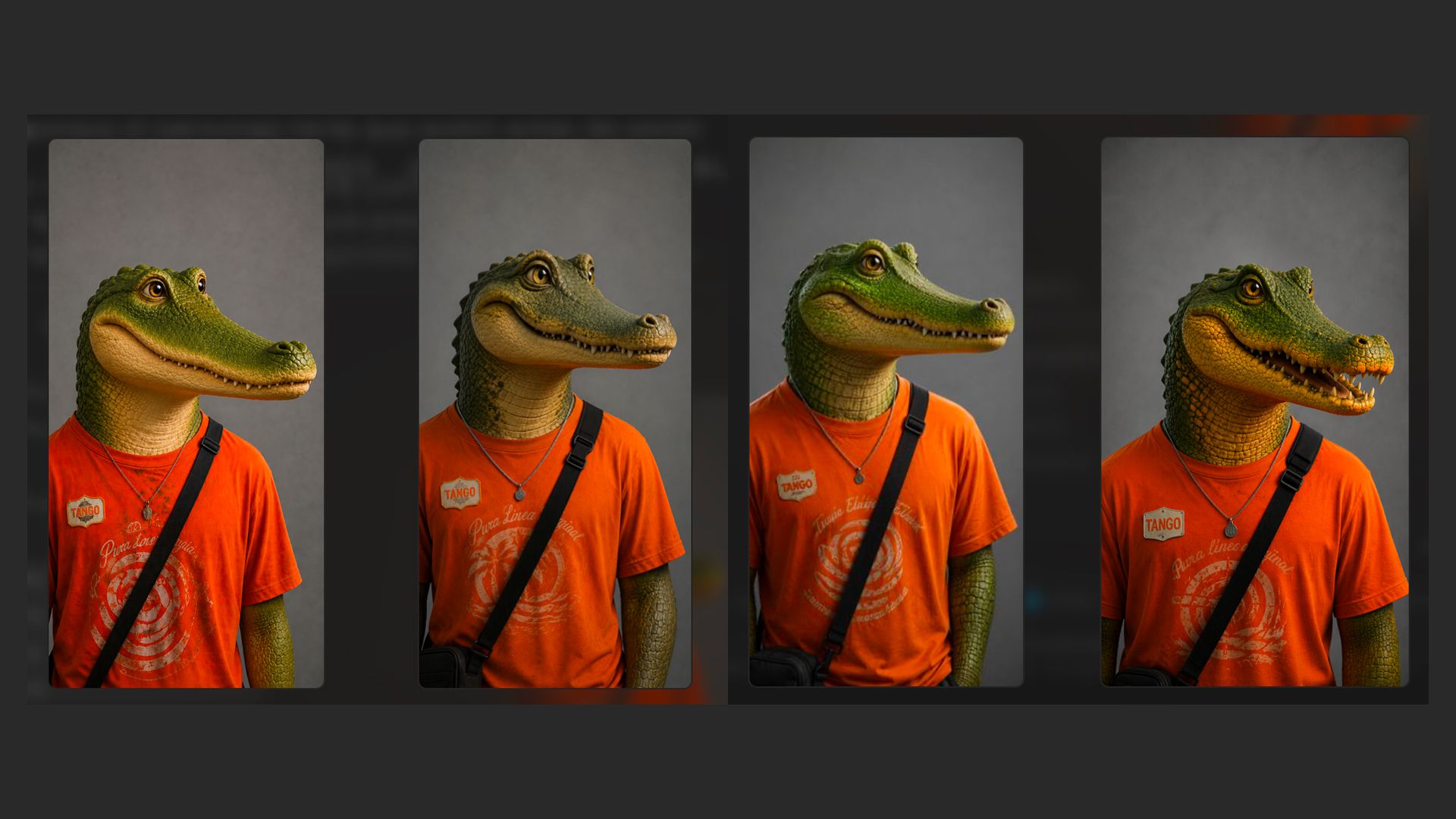
Before filming, the team tested the approach with a dancer recorded on a phone. The side-by-side test shows the performer and a crocodile version following corresponding movements in the rehearsal space. It gave Levector a way to evaluate the transformation while there was still time to adjust the approach.
For the live production, Levector cast the performers, scouted locations, developed art direction and wardrobe, planned camera work, and rehearsed the movement. The commercial was shot on the streets of Quito.
After filming, the team transformed selected performances into crocodile characters and integrated the results with compositing, VFX, motion graphics, and color.
“The goal was never to ask AI to decide how the character should perform. The directing team first defined and directed the performance, and then we used AI to transform that performance.”
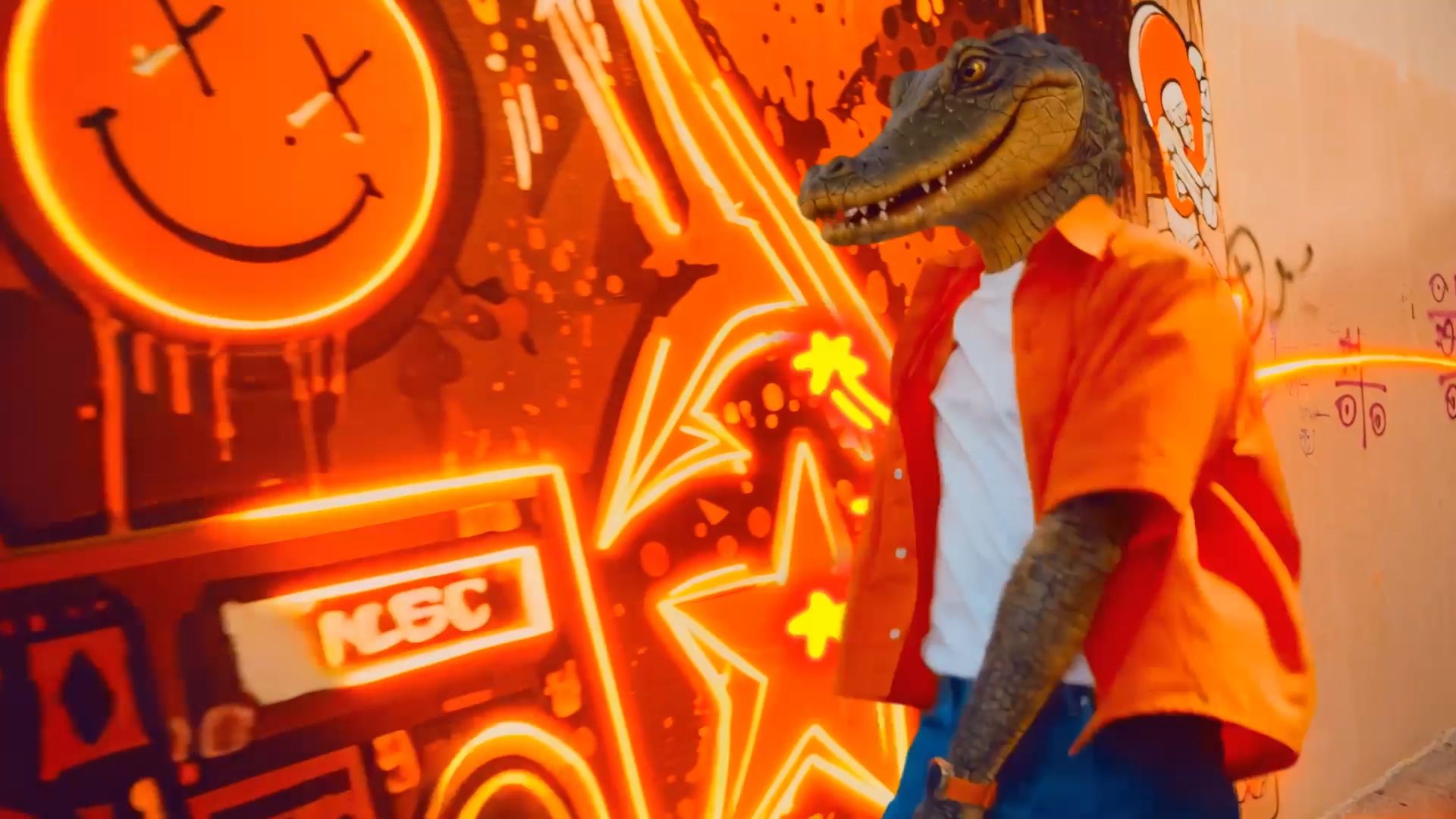
The supplied breakdown makes those stages visible. The live-action frame shows the actor against the original wall. A second frame shows the crocodile character in that setting, and the composited version adds the campaign’s orange environment.
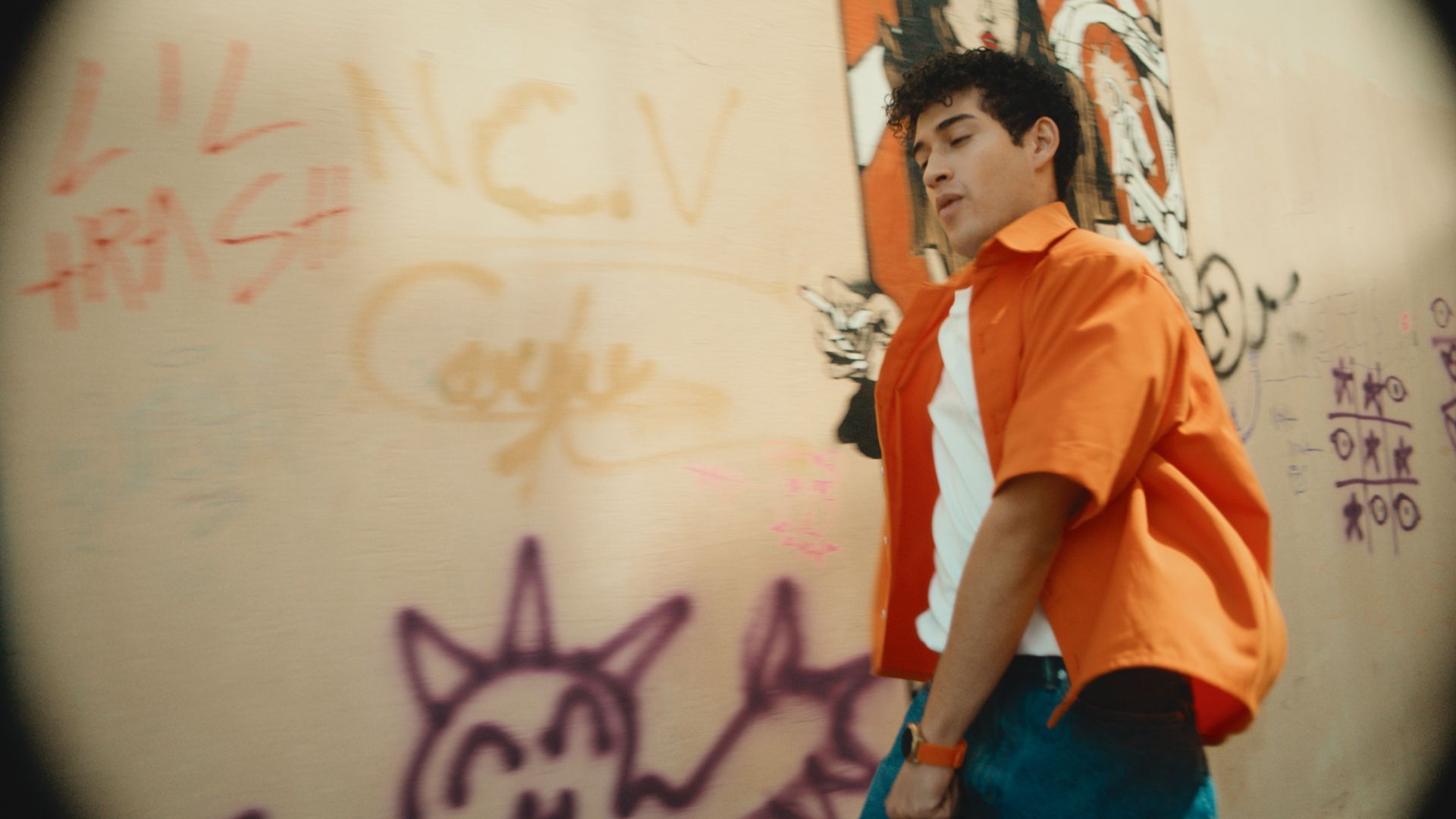
The environment work also began with the filmed location. In the sidewalk sequence, the street’s layout remains recognizable as orange patterns and illuminated lines spread across the pavement, trees, and storefronts. This gave the character’s transformation a setting that changed with it.


The products
Levector used Higgsfield across creative treatment, pre-production, and post-production for character concepts, visual variations, environments, movement tests, and video generation. The studio names GPT Image 2 and Seedance among the models used on the platform.
The project used approximately 18,000–20,000 Higgsfield credits across image generation, tests, iterations, and video generation.
The result
Levector estimates that Higgsfield saved approximately three weeks or more in certain character-development stages compared with a traditional 3D pipeline. The studio also estimates that some character-concept and development processes took roughly half the time. Those estimates concern specific stages; the live shoot, editing, compositing, directing, and color remained part of the production.
The traditional alternative would have required concept art, modeling, texturing, rigging, animation, lighting, and rendering before compositing. Levector estimates that developing one lead character and adapting its motion across roughly ten shots could have cost more than USD 6,000–7,000, before revisions, rendering, compositing, or additional characters. This is the studio’s estimate of the traditional alternative, rather than a measured project saving.
The change also affected when artists could contribute. Compositors could help develop characters, editors could explore environments, and motion designers could carry visual proposals into compositing. More of that work could happen in parallel, with artists involved earlier in decisions that would shape the finished film.
“AI did more than make our process faster; it changed the role of our artists within that process. Today, people who previously had to wait for their stage can participate from the beginning, conceptualizing characters and worlds. For us, that means a more creative team, a more flexible pipeline, and the ability to take on ideas that would previously have been much more difficult to produce.”
by Higgsfield