Creator Hub

Egor Kuzmin: Putting AI Video in Front of 86,000 People on Stadium Screens

Higgsfield12 min

Egor Kuzmin is an AI video creator and Creator Partnership Program member on Higgsfield, the AI-native creative suite. In July 2026, three minutes of film he generated on Seedance 2.0 played on the screens of a stadium show, two nights in a row. The project came from a free 15-second snippet he posted. He runs an AI video school with about 4,000 graduates, taught on Higgsfield.

Who is Egor Kuzmin

Egor Kuzmin is an AI video creator and a former architect. Before generative video became his profession, he spent ten years in architecture: a five-year bachelor’s degree, a two-year master’s in Germany, and three years teaching at a German university.

Today he works with major artists, bloggers and brands in the CIS, including Egor Kreed (pop artist, two stadium nights at Luzhniki in July 2026), Eldzhey (rapper, the first artist to commission a music snippet from him) and Mobile Legends (a mobile game with a large player base across Asia, an ad integration made on Higgsfield).

His work in credits:

  • Architecture: ten years in the field, including a master’s degree in Germany, three years of university teaching there, and work at an engineering bureau
  • Blog: a personal blog about AI video with 196,000 followers across platforms as of October 2026: 114,000 on Instagram, 54,000 on TikTok, 21,000 on Telegram, plus YouTube
  • XR School and XR Production: founder of both; lead instructor of a two-month AI video course taught on Higgsfield, with a production team drawn from its graduates
  • Higgsfield: on the platform since its launch; Creator Partnership Program member since January 12, 2026

“I always wanted to be first at something. My colleagues designed buildings; I designed spacecraft. AI gives you that feeling every month, because every month a new model comes out.”

Scale at a glance

Scale at a glance

Metric

Before

Now

Role

Architect and teacher at an architecture school

AI video creator, founder of XR School and XR Production

Audience

Under 10,000 followers

86,000 people at the first Luzhniki show, according to Kuzmin

Clients

AI companies asking for reels about their tools

Major artists, bloggers and brands

Project scale

A 15-second snippet

A 3:30 film segment for stadium screens, 3 minutes of it generated by Kuzmin

Time per project

About 4 hours

4 evenings

Credits per project

A few hundred on a snippet

16,000 credits, 55 Seedance videos

Students

One university class

About 4,000 graduates, all trained on Higgsfield

Plan and credits

Paid out of pocket

Covered by the Creator Partnership Program since January 12, 2026

How a free 15-second snippet led to a stadium show

The Luzhniki project started with a public post. The chain, in order:

  1. A free livestream. Kuzmin ran an open stream on how to make a music snippet on Higgsfield, using Seedance 2.0 in 1080p in the week it became available on the platform. He picked an artist from the top of the charts, which is what he tells his students: make the snippet for someone whose fans will share it. The 15-second clip took about four hours.
  2. A message three minutes later. He posted the snippet, and at first it drew little attention. Three minutes after posting, a music video director wrote to him: the director and the artist were finishing a video and needed AI shots they could not get right. It was 10 pm. Kuzmin delivered within an hour, free of charge, and added a few extra images that ended up on the video's YouTube cover.
  3. A paid project. The next request was "Malo 2.0", a music video with several artists, announcing the stadium show. Roughly half of it is live footage and half is generated. Kuzmin was one of up to six AI creators and spent 12,000 credits on 49 Seedance videos over four evenings.
  4. The stadium film. While "Malo 2.0" was in progress, the show’s creative team asked for a film segment for the stadium screens.

“I spent ten years in architecture and never reached an artist of this level with it. With AI generation, a beginner can reach their favorite artist in a month or two, and maybe their work ends up on a stadium screen too.”

What 86,000 people saw at Luzhniki

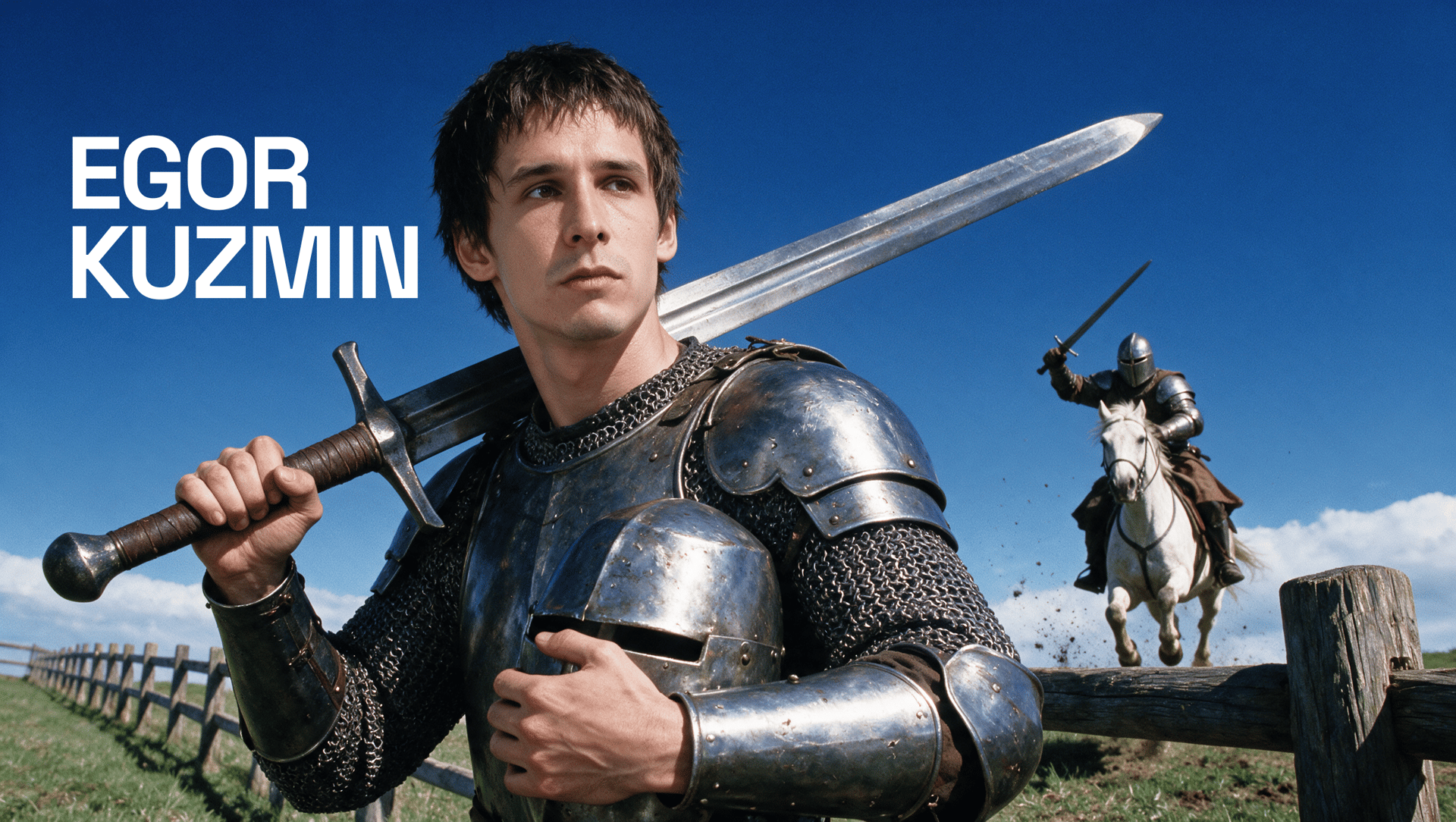
The segment is a 3 minute 30 second film shown between songs, during a costume and set change, on the screens of Luzhniki: a medieval battle with the artist as a knight, a castle, tens of thousands of soldiers and hundreds of horses. Other creators made other segments of the show; this was the largest battle scene. In his own post the day after the first show, Kuzmin put the audience at 86,000 people watching at once.

Kuzmin generated about three minutes of the segment himself. It was his first project on Seedance 2.0 in 4K, which had just been released on Higgsfield, and the footage went to the screens without upscaling. One opening shot took around 30 generations; most of the rest landed on the first or second try. The script came from the show's creative team; the shots and camera moves were his. He spent 16,000 credits on 55 videos. He did not see the final cut until he was in the stands, and he filmed the crowd's reaction on his phone.

"When you see everyone watching at the same moment, that is something money cannot buy. You cannot make people look at your work all at once. I got to live that."

The pipeline: how the stadium film was made on Higgsfield

The stadium film was a multi-stage workflow. Some parts stayed in Higgsfield; others went to the show’s production team.

The pipeline: how the stadium film was made on Higgsfield

Stage

How it ran on Higgsfield

What stayed outside

Pre-production

Shared reference assets for every creator on the project: one face, one outfit, one set of moodboard images

Script and shot list from the show's creative team

Character consistency

Shared reference portraits of the artist, reused as start frames

Approval of the final likeness by the artist's team

Video generation

Seedance 2.0 in 4K, in 5 to 15 second segments; today Kuzmin runs about 95% of his video work on Seedance 2.5

None

Sound

Seedance audio as the base layer

A film sound engineer mixed the final track

Edit and delivery

Generated clips exported from Assets

Editor assembled the segment

Kuzmin builds long pieces the way he built snippets: short segments of 5 to 15 seconds, each finished on its own, then assembled. Three minutes of film generated as a few long takes is harder to control than a dozen short segments, and a short segment can be redone for a fraction of the cost.

For other artist projects, Kuzmin also uses Soul ID for character consistency: a trained identity that helps keep the same face across generations. Artists’ teams check the face and body before anything else. On a project for a pop artist, he produced 60 portrait variants with Soul ID, marked his top ten, and let the artist’s team choose, because they know which details the artist accepts.

A Soul ID portrait can then serve as the start frame for a Seedance generation, which helps carry the identity into motion; the workflow is described in How to keep your AI character consistent.

On projects with teams of around ten people, most of the creators already work on Higgsfield, so they can trade settings and fixes in a message without explaining the interface to each other. What decides the schedule, in his experience, is what happens before the first generation.

“The better the pre-production, the better the final project. If the script is written first and the AI creators come in afterwards, the schedule slips: one scene needs a different approach, another needs more time than anyone planned, and a week turns into a month.”

How he got here

The stadium film was the point Kuzmin had been working toward for three years. He got into architecture the way his parents did, and he liked the work: a respected bureau and a teaching position at the school in Germany where he had studied. There he ran a VR design class when the first consumer headsets had just arrived; his students were the only group in the building working in headsets.

In 2021 he wrote to OpenAI as an architect with a spacecraft project and got access to DALL·E among its first few hundred users. What convinced him was that the model kept the proportions and logic of his prompts. At the time, Kuzmin saw no established profession or market around AI video. What convinced him to leave architecture was different: a colleague who had spent more than twenty years at the bureau passed away, and Kuzmin helped carry boxes out of the empty office. He did not want the same twenty years.

“Until 27 I walked a road that was already built: school, art school, university, Germany, a good bureau. AI was the first decision that was mine.”

His personal blog about AI began as a bet of about $2,500 with a friend who worked in content: post reels for three months, and Kuzmin, who describes himself as a shy person, took it. The blog eventually became the starting point for his AI work. The friend handed over what he knew about storytelling and left after three months. The reaction was mixed: AI content was new, and many professionals, 3D artists among them, were skeptical. He kept posting.

Three things happened in sequence:

  1. The first clients were AI tools themselves. Companies asked him to make reels about their products. He ran consulting sessions for entrepreneurs. A producer found him through a reel and became his business partner on every education project since.
  2. The first artist. A rapper from the top of the charts messaged him after a reel with 40,000 views, asking for a snippet for a track called "AI". Kuzmin had under 10,000 followers. He made it, the artist released it, and within a week 15,000 to 20,000 people from the industry followed him.
  3. Brands. The first brand client was a drinks brand launching a collaboration with a clothing label: he built the teaser from phone photos of the jackets on a factory floor, and it outperformed the brand’s live-shot ad. Ad integrations for a YouTube channel followed, including the one for Mobile Legends, all made on Higgsfield.

In those years, he and his partner say, AI content was its own genre: surreal, hard to make any other way, and good at cutting through banner blindness. In their account, clients no longer ask whether AI will fit the brand; the question now is budget, and generated footage is one of the ways productions cut it.

“When what I earned from AI, social media and teaching passed my salary at the bureau and the university, I left. That was the turning point in my life.”

His manager supported the decision. His parents, both architects, took longer to accept it.

What Egor Kuzmin teaches 4,000 students on Higgsfield

XR School is a two-month course, and every practical module runs on Higgsfield. The curriculum in order:

  • Images, including images with a real person, such as an artist or a public figure
  • A product ad, a module on building a commercial around a physical product
  • A music snippet, a format where a strong result gets noticed either by the artist’s team or by the fans, and both count as a win
  • A cinematic, a one-minute horizontal piece with a story
  • Clients, a growing share of every cohort: how to reach a customer, take a prepayment, run pre-production
  • Promotion, a full module on getting commissions through social media

Graduates join a free community with a work hub where Kuzmin passes on requests he cannot take himself. When a large project comes in, he picks creators from that pool: for "Malo 2.0" he brought a graduate who had already generated for the same artist during the course.

"The last stage of any project is not a good generation. It is showing it to an audience. Most people skip that step. A project is finished when someone has seen it."

What creators can take from this project

  • Publish before you are asked. The four-hour snippet set off the chain of projects that eventually led to the stadium film. A portfolio matters, and a finished piece posted in public is the fastest way to add to it: the people who commission work are watching the same feeds. On Higgsfield, Community is the place built for this step.
  • Build on the newest model early. The snippet and the stadium film were made in the first weeks of a Seedance release on Higgsfield, while few people had seen output like it.
  • Settle the face first. For artists, the face and body are the first thing their team checks. On his other artist projects, Kuzmin generates variants with Soul ID, offers a shortlist, and lets the artist’s team choose.
  • Test short and cheap. Test a shot for five seconds at lower quality before spending more credits on a longer or higher-resolution generation. Every second of a 15-second piece can be made perfect; every second of three minutes cannot, so build the long piece from short ones.
  • Pre-production decides the deadline. Shared assets and an agreed shot list turned three minutes of generated film into four evenings of work.
  • Work from a moodboard. Pick references the audience already recognizes, lean on them, and treat it as training for the eye: a shot in the palette of a well-known film reads better than a shot built from nothing.

Inside the Creator Partnership Program

Kuzmin joined the Higgsfield Creator Partnership Program on January 12, 2026, and he was one of the first creators Higgsfield worked with before the program existed in its current form. What the program is, who it is for, and how it works is covered in our dedicated article; here is what it looks like from a creator who also teaches.

What the program covers:

  • A monthly plan and generation credits
  • Early access to new models
  • A direct line to the Higgsfield team
  • A network of about 1,000 Creative Partners worldwide

What it changed in his work:

  • Experiments no longer compete with client budgets: he tests a new model on his own time, then brings the result to a livestream or the next cohort
  • His course now includes an hour-long lesson, recorded with the Higgsfield team, on how creators become Creative Partners, and several graduates have joined the program on their own

"A weight off my shoulders. I can experiment without thinking about how many credits this one costs. If there is no budget for an experiment, the experiment does not happen."

Applications to the program are open on the Creator Partnership Program page.

Where the work goes next: Higgsfield Community

Several of the biggest turns in Kuzmin’s career started with work he published publicly: the first artist found him through a reel, the stadium show came from a free snippet, and his students get their first clients the same way. Higgsfield Community is built around that loop. It is the part of the platform where creators publish finished work with the process behind it, follow each other, and enter contests, and it is open to anyone with a Higgsfield account.

How Kuzmin’s path maps onto it:

  • A snippet that gets noticed. Shots is the feed of single generations. Each one is published with its prompt, model and settings, so another creator can study how it was made and recreate it.
  • A project with the process on display. Open Projects are published with the brief, the shot list, the assets and the credits spent, so a finished piece doubles as a record of how it was made.
  • Contests. The Global Film Festival runs on Community with a $1,000,000 prize pool and fourteen winners; submissions are public and sit next to Higgsfield Originals on the same page.
  • A profile that works as a portfolio. Every creator has a public page where their published Shots, Open Projects and posts collect, visible to anyone with or without an account.

Kuzmin follows the Higgsfield partners he discovered early and says watching them publish keeps him producing.

“One of the things I wanted most was to get into the community of creators I admired. AI was how I got in.”

Publishing starts on the Community page; the mechanics of profiles, Shots and Open Projects are covered in the Help Center.

What's next

  • Kuzmin is moving part of his practice into 3D and 2D animation built with LLM assistants and Blender, the area he wants to learn next
  • XR School keeps adding to its clients and promotion modules, and Kuzmin expects the next cohorts to produce more working creators

We asked Kuzmin what he would say to the architect who was about to leave a ten-year career.

“Do not be afraid of anything. In the end it always works out, and in the moment you forget that. If my son told me he wanted a creative profession, I would send him into AI. That is the future, and the present.”

Quotes are translated from Russian.

Watch the work

Egor Kuzmin: Putting AI Video in Front of 86,000 People on Stadium Screens

Apply to the CPP Program

Got any questions left?

by Higgsfield